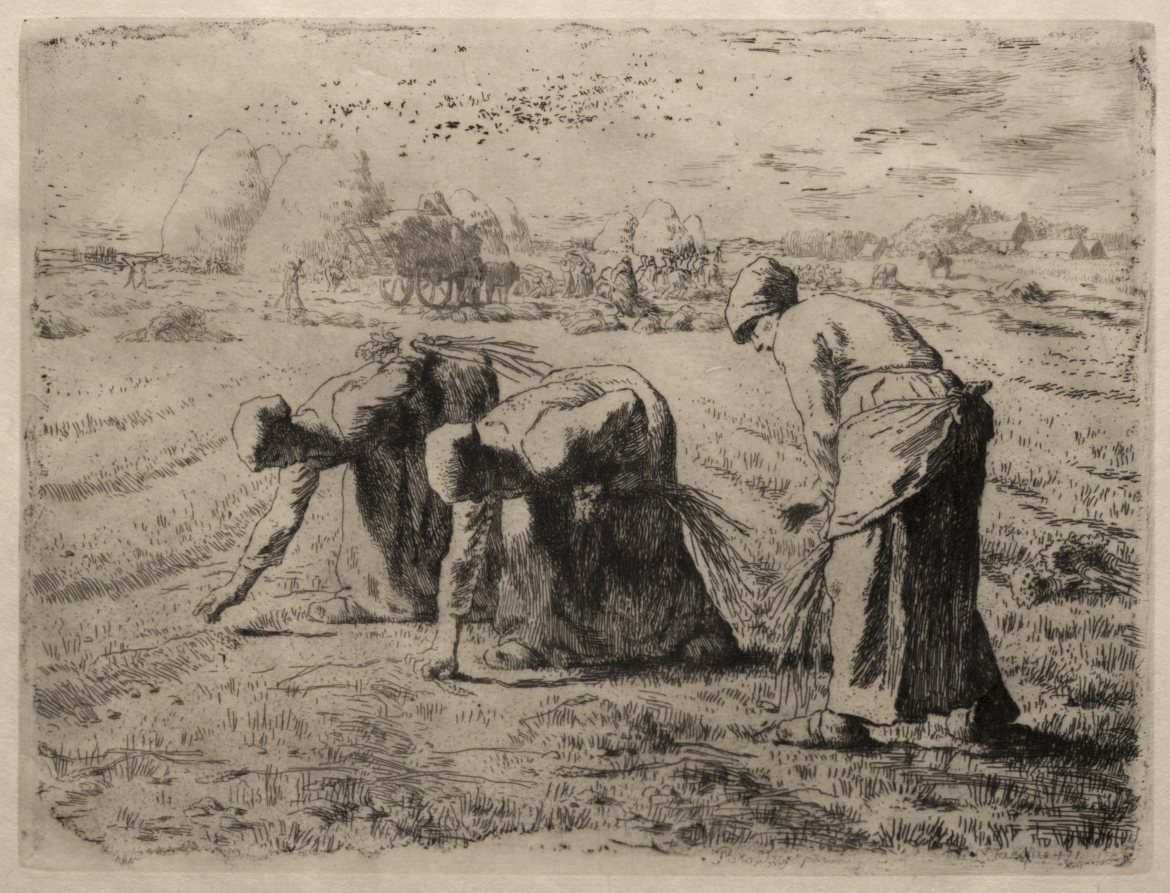

Jean-François Millet
1814-1875
“If I could only paint what I see.”
Realism
Known For



About
Jean-François Millet emerged from rural France in the mid-19th century, bringing peasant life into the center of serious art. Born in Normandy in 1814 and later working in Barbizon, he painted during a period of rapid industrial and social change. Millet mattered because he treated agricultural labor not as picturesque scenery, but as a defining human experience. Millet transformed realism by slowing it down. His figures are monumental and grounded, silhouetted against wide skies and fields. He avoided drama in favor of endurance, showing sowers, gleaners, and shepherds absorbed in repetitive work. These scenes carry a quiet gravity, blending observation with a sense of timeless ritual. When viewing Millet, pay attention to posture and scale. Bodies bend, hands grip tools, movements repeat. The land feels vast, almost solemn. His paintings ask you to feel the weight of labor and the dignity embedded in routine. They are less about hardship than persistence, offering a vision of humanity rooted in patience and resilience.
Masterpieces


