Scene
The work presents a rigorously ordered arrangement of vertical and horizontal black lines. These lines frame rectangles of off-white and a few carefully placed areas of primary color. The composition does not depict any recognizable objects.
Tableau I

Piet Mondrian
1921
The work presents a rigorously ordered arrangement of vertical and horizontal black lines. These lines frame rectangles of off-white and a few carefully placed areas of primary color. The composition does not depict any recognizable objects.
There are no human or animal figures shown in the painting. The artwork focuses entirely on abstract geometric forms.
Vertical and horizontal lines stand for opposing but balanced forces in nature and human experience. The limited palette of primary colors and non-colors aims to transcend specific places and things. The grid structure suggests a rational order and spiritual harmony.
Mondrian adjusted the thickness and length of each line and the size of each colored rectangle to create asymmetrical balance. Many black lines stop short of the painting’s edges, giving the composition a self-contained character.
The painting became emblematic of modernist ambition and influenced generations of painters, architects, and designers. Its vocabulary of right angles and primary colors was adopted in fields like typography and furniture design. It remains a key document in the quest for a new visual structure in the 20th century.
Tags
Ask AI
Craft
Movement
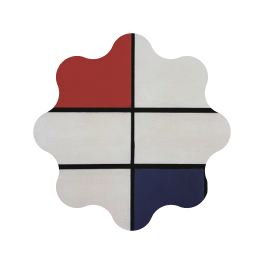
Neo-Plasticism
Used strict grids and primary colors to pursue visual balance, order, and universal harmony through pure abstraction.