

Michelangelo
1475-1564
“If people knew how hard I worked to get my mastery, it would not seem so wonderful at all.”
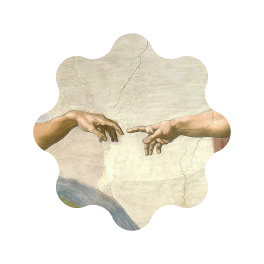
High Renaissance



Themes
About
Michelangelo worked in Italy during the High Renaissance, a period obsessed with human potential and divine order. Born in 1475 and active mainly in Florence and Rome, he saw himself first as a sculptor, even when painting or designing buildings. Michelangelo matters because he gave form to ambition itself, pushing the human body into a vessel for spiritual struggle, power, and longing. He transformed art through intensity. His figures are muscular, tense, and alive with inner force, whether carved from marble or painted across vast ceilings. Anatomy becomes expressive rather than decorative, and scale becomes a language of awe. In works like the Sistine Chapel frescoes and his sculptures, beauty is inseparable from effort, strain, and faith. When you look at Michelangelo, feel the pressure in the bodies. Notice the twists, the weight, the sense that figures are holding more than they can bear. His art is not calm, it is charged. It invites you to reflect on ambition, devotion, and the cost of striving toward something larger than yourself.
Masterpieces


