Fauvism
About
Color Breaks Free
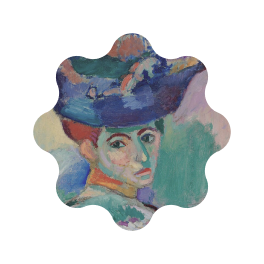
By the early 1900s, Impressionism had softened painting into gentle atmospheres, but color still served description, still answered to what the eye actually saw. Fauvism promised something wilder: color unshackled from reality, applied not to record the world but to feel it, loud and unapologetic.

Woman with a Hat

Henri Matisse
1905
Instinct Over Accuracy
When you see faces streaked with green and orange, landscapes blazing in unnatural hues, and brushwork that feels urgent rather than refined, you're probably in Fauvism. Forms simplify into bold shapes, perspective flattens, and the canvas becomes an arena for pure chromatic intensity. This was painting that trusted the gut over the eye.

Artists


Artworks