HomeDiscoverSaved
Expressionism

Expressionism

1905-1925
Medieval
Early Renaissance
Northern Renaissance
High Renaissance
Dutch Golden Age
Baroque
Rococo
Neoclassicism
Romanticism
Realism
Impressionism
Post-Impressionism
Expressionism
Fauvism
Cubism
Suprematism
Neo-Plasticism
Surrealism
Abstract Expressionism

About

When Feeling Breaks the Surface

By the early 1900s, realism and polite beauty felt too small for modern life. Expressionism flipped the goal: don’t describe the world, distort it until it matches the pressure inside a person. Line, color, and anatomy became tools for honesty, not accuracy.

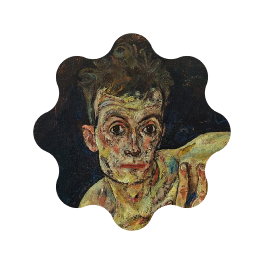
Self-Portrait with Physalis

Self-Portrait with Physalis

Egon Schiele

Egon Schiele

1912

Distortion as a Language

When you see bodies stretched, hands sharpened into angles, faces turned into masks, and space made unstable, you’re in Expressionism. The drawing often feels urgent, as if it was pulled out rather than carefully built. Emotion is not the subject, it is the method.

Death and the Maiden (Schiele)

Artists

Egon Schiele

Schiele

Francis Bacon

Bacon

Artworks

Portrait of Wally

Portrait of Wally

Self-Portrait with Physalis

Self-Portrait with Physalis

Death and the Maiden (Schiele)

Death and the Maiden (Schiele)

Seated Woman with Bent Knee

Death and the Maiden (Schiele)

Egon Schiele

Egon Schiele

1915

Intensity That Wouldn’t Go Away

Expressionism trained viewers to trust intensity over polish, it proved that form can carry psychological truth. After war and rupture, that lesson returned with new force, artists pushed the human figure into harsher spaces where anxiety, power, and isolation could not be softened.

Study after Velázquez's Portrait of Pope Innocent X

Study after Velázquez's Portrait of Pope Innocent X

Francis Bacon

Francis Bacon

1953

Seated Woman with Bent Knee

The Embrace (Schiele)

The Embrace (Schiele)

The Family (Schiele)

The Family (Schiele)

Three Studies for Figures at the Base of a Crucifixion

Three Studies for Figures at the Base of a Crucifixion

Painting (1946)

Painting (1946)

Study of a Nude

Study of a Nude

Study after Velázquez's Portrait of Pope Innocent X

Study after Velázquez's Portrait of Pope Innocent X

Figure with Meat

Figure with Meat

Three Studies for a Portrait of George Dyer

Three Studies for a Portrait of George Dyer

Triptych May-June 1973

Triptych May-June 1973